BOUTIQUE HOTELS LONDON
The Newman
Fitzrovia’s most talked-about boutique opening: design-led, neighbourhood-rooted, and genuinely worth the hype.
The Newman Review: An Honest, In-Depth Look at Fitzrovia’s Hottest New Opening
Fitzrovia has quietly become London’s most exciting neighbourhood for hotel openings — and The Newman is the property that has the hospitality world talking. Sandwiched between the polished calm of Marylebone and the creative energy of Soho, it occupies a pocket of the West End that feels, somehow, both central and unhurried. That’s a rare thing in London.
But does it live up to the hype? We stayed so you don’t have to wonder.
The Newman Hotel Fitzrovia positions itself as a design-led boutique property with genuine neighbourhood character — not a corporate box dressed in exposed brick, and not a try-hard ‘lifestyle’ hotel that mistakes mood lighting for substance. The ambition is clear from the moment you arrive. Whether the execution matches it is a more interesting question.
At a Glance — The Newman Hotel
- Address: Fitzrovia, London W1
- Price Range: Approx. £250–£600+ per night (varies by season and room category)
- Star Rating (our verdict): ★★★★ (4/5)
- Check-in / Check-out: 3:00 PM / 12:00 PM
- Best For: Design-conscious couples, solo travellers, creative professionals
- Website: thenewmanhotel.com
This review covers everything: the rooms, the design, the food and drink, the service, the pricing, and — importantly — who this hotel is actually for. If you’re comparing The Newman against other Fitzrovia and West End boutique hotels, there’s a dedicated comparison section towards the end. No paywall. No sponsored content. Just an honest account of what staying here is actually like.
First Impressions: Arrival, Location & Neighbourhood
Where Exactly Is The Newman Hotel? Fitzrovia Explained
Fitzrovia is one of those London neighbourhoods that resists easy definition — which is precisely what makes it interesting. Bounded roughly by Oxford Street to the north, Tottenham Court Road to the east, Oxford Circus to the west, and Soho to the south, it sits in a genuinely enviable position within the West End. It has the energy of Soho without the Saturday-night chaos, and the calm of Marylebone without the distance from everything.
The Newman Hotel sits within this pocket with quiet confidence. It’s close enough to Oxford Street that a shopping trip takes minutes, yet far enough removed that you don’t hear it from your room. Charlotte Street — one of London’s better restaurant strips — is practically on the doorstep. The British Museum is a fifteen-minute walk east. Regent Street, Carnaby Street, and the green lung of Regent’s Park are all within comfortable reach.
For most visitors to London, this location is genuinely excellent. It’s not a compromise.
Getting There: Transport Links and Walkability
The nearest tube stations are Goodge Street (Northern line, roughly a three-minute walk) and Oxford Circus (Central, Victoria, and Bakerloo lines, around eight minutes on foot). That gives you direct access to a huge swathe of the city without needing a taxi. Euston and King’s Cross — both major rail termini — are accessible in under fifteen minutes by tube, which matters if you’re arriving from the north or catching an early Eurostar.
Walkability from the hotel is strong. Soho, Covent Garden, Bloomsbury, and Marylebone are all manageable on foot. If you’re the kind of traveller who wants to walk London rather than tube it, The Newman is well-positioned for exactly that.
Taxis and rideshares pull up easily on the surrounding streets — no awkward one-way system to navigate, which is more than can be said for some West End properties.
The Arrival Experience
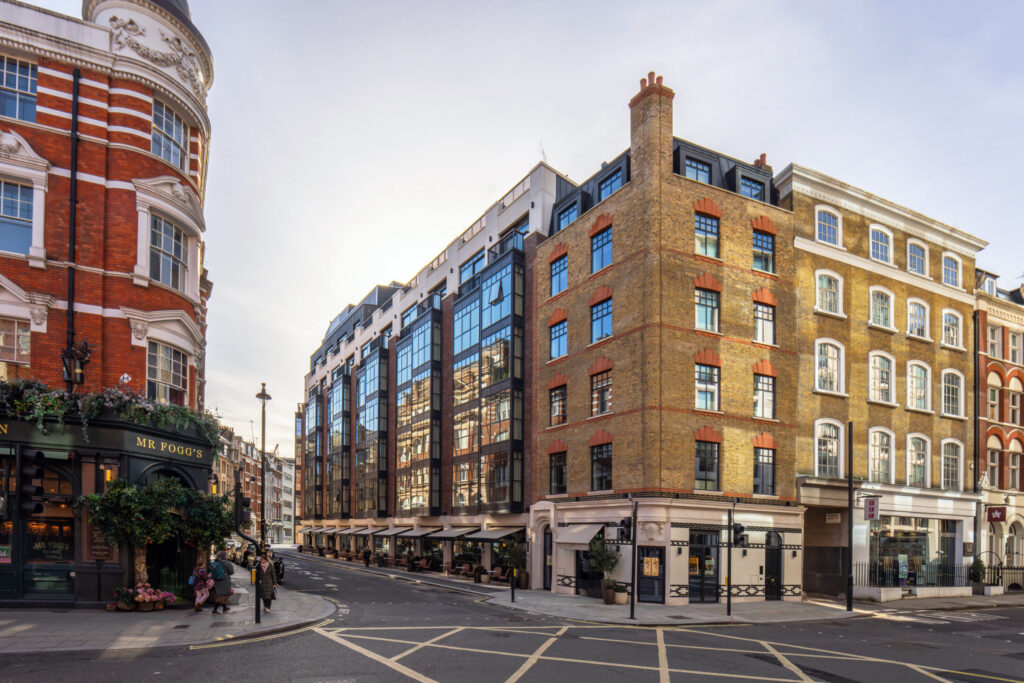
The exterior doesn’t shout. There’s no theatrical canopy, no doorman in a top hat. What you get instead is a restrained, handsome façade — the kind that makes you feel like you’ve found somewhere rather than been directed to it. The entrance is understated in the way that confident things often are.
The lobby follows the same logic: considered, calm, and clearly designed rather than merely furnished. First impressions suggest a hotel that knows its audience — people who’d rather have a well-chosen piece of art on the wall than a chandelier the size of a small car.
Honest assessment: the location is unambiguously a strength. The neighbourhood character adds something most central London hotels can’t manufacture.
Design & Atmosphere: What Does The Newman Actually Look Like?
Architectural Heritage and Building History
The building itself carries the kind of quiet architectural authority you find throughout Fitzrovia — Georgian bones, Victorian additions, and the accumulated layers of a neighbourhood that’s been many things to many people. The Newman’s designers haven’t tried to erase that history. They’ve worked with it.
The original structure has been carefully preserved where it matters: ceiling heights, proportions, the rhythm of the windows from the street. What’s been added sits alongside the existing fabric rather than competing with it. That’s harder to pull off than it sounds, and the fact that it works is a credit to the team behind it.
Interior Design Concept and Creative Direction
The hotel has not publicly credited a specific architecture or interior design studio by name, which is unusual for a property of this ambition. The result, however, speaks for itself — the work is coherent, accomplished, and clearly the product of a team with a strong point of view rather than a committee making safe choices.
The interior design language at The Newman is best described as warm modernism with a British literary lean. There are references throughout — in the artwork, the library shelving in communal areas, the typography on signage — to Fitzrovia’s long history as a bohemian creative quarter. Dylan Thomas drank nearby. The Bloomsbury Group wasn’t far. The hotel doesn’t belabour this history, but it’s present as texture rather than theme-park decoration.
Materials are high quality. Tactile surfaces — natural stone, aged brass, textured plaster walls — give the spaces a physical richness that photographs well but feels even better in person. The colour palette leans into deep greens, warm ochres, and the kind of off-white that reads as cream in evening light. It’s a considered choice: these are colours that age well and don’t tire quickly.
Lighting has been given serious attention. Layered, warm, and controllable — it’s the kind of lighting that makes people look good and feel relaxed, which is exactly what a hotel should aim for.
Pre-Opening Promises vs. Finished Reality
The Newman was marketed pre-opening as a design-led boutique hotel rooted in Fitzrovia’s creative heritage — a property that would balance neighbourhood authenticity with genuine luxury. On the whole, the finished product delivers on that positioning. The design coherence, the literary references woven through the interiors, and the neighbourhood bar atmosphere are all present and correct.
Where the reality falls slightly short of the pre-opening press is in the wellness offering — early materials implied a more developed spa programme than the single compact gym that made it to opening. It’s a minor gap rather than a broken promise, but worth noting for guests whose expectations were set by that earlier coverage.
Public Spaces: Lobby, Corridors, and Communal Areas
The lobby functions as more than a check-in point. There’s seating arranged for actual use — not just aesthetic staging — and a sense that guests are welcome to linger. The corridors leading to the rooms maintain the quality of the ground floor, which isn’t always the case in boutique hotels where the budget sometimes runs thin by the time you reach the upper floors.
Mood and Atmosphere
What separates The Newman from the broader London boutique hotel pack isn’t any single design decision — it’s the consistency. There’s no jarring shift between the entrance and the bedroom, no sense that different designers worked on different floors without talking to each other.
The atmosphere is sophisticated without being stiff. You can arrive in trainers and feel comfortable, but equally, dressing for dinner here makes sense. That tonal range is genuinely difficult to achieve and the hotel pulls it off with relative ease.
For context: it feels closer in spirit to The Zetter or The Bloomsbury than to the more aggressively ‘cool’ aesthetic of some newer London openings. That’s not a criticism — it’s a positioning observation. The Newman is built to last, not to trend.
The Rooms: A Detailed Breakdown
Room Categories and What’s Available
The Newman offers several room tiers — from Classic Rooms through to Deluxe and Superior categories, with a small selection of suites at the top of the range. The precise configuration varies, so it’s worth checking directly with the hotel for current availability, particularly if you have specific requirements around size or layout.
For most guests, the Deluxe Room is the sweet spot. It’s where the design intent is most fully realised without the price premium of the suites, and the sizing is reasonable by London’s notoriously compressed standards.
Room Category Comparison
The table below summarises the key differences across room tiers to help you decide which category suits your trip:
| Room Category | Approx. Price Range | Key Features | Best For |
|---|---|---|---|
| Classic Room | £250–£320/night | Queen bed, walk-in shower, compact footprint, full design scheme | Solo travellers, short stays, budget-conscious guests |
| Deluxe Room | £320–£420/night | King bed, rainfall shower, some with freestanding bath, more floor space | Couples, city breaks, the sweet-spot value tier |
| Superior Room / Junior Suite | £420–£550/night | Separate living area, freestanding bath, premium toiletries, enhanced views | Extended stays, special occasions, guests who need to work from the room |
| Suite | £550–£700+/night | Full suite layout, maximum space, premium finishes throughout | Anniversaries, high-end leisure, those prioritising space above all |
Prices are indicative and vary by season. Always confirm current rates directly with the hotel or via booking platforms.
What the Rooms Look Like: Size, Layout, and Furnishings
Let’s be honest about London hotel room sizes: they’re almost always smaller than the photographs suggest. The Newman is no exception — but it handles the constraint better than most. The layouts are intelligent. Storage is genuinely usable. The furniture has been chosen to fit the space rather than fill it, and the result is rooms that feel purposeful rather than cramped.
The design language carries through seamlessly from the public areas. You get the same warm palette, the same quality of materials, the same considered lighting. The artwork in each room is original rather than a generic print, which matters more than people might expect — it’s one of those small details that shifts a room from ‘hotel’ to ‘somewhere’.
Furnishings are high quality throughout. Upholstered headboards, solid wood furniture, and curtains with real weight to them. Nothing feels flat-pack or provisional.
Bed Comfort, Linens, and Sleep Quality
The beds are excellent. That’s not a throwaway line — in a city where you can pay £300 a night and sleep on a mattress that belongs in a budget chain, it matters. The mattress has genuine support, the pillows offer a choice of firmness (though it’s worth requesting this at check-in rather than hoping), and the linens are high thread-count without feeling overly clinical.
Sleep quality depends partly on the room you’re in. Rooms facing the street can pick up some ambient noise from Fitzrovia’s low-level evening activity, though it’s nothing like the roar you’d get in Soho. Rooms on upper floors or facing the internal courtyard are noticeably quieter — worth requesting if light sleep is a concern.
Bathroom: Design, Amenities, and Toiletries
The bathrooms are a genuine highlight. Generously sized for the room category, finished in veined stone with warm brass fittings, and equipped with both a walk-in rainfall shower and — in most Deluxe and above categories — a freestanding bath. The kind of bath that makes you reconsider your evening schedule.
Toiletries are from a quality independent brand — not the generic white-label bottles that feel like an afterthought. Dispensers are fitted to the wall rather than single-use plastics, which is a practical sustainability choice as much as an aesthetic one. Storage around the basin is adequate if not abundant.
Technology, Connectivity, and In-Room Entertainment
Wi-Fi is fast and hotel-wide — no dead spots, no fiddly login process. The television is large and smart, with streaming apps built in, which means you can continue watching whatever you were watching at home without needing a workaround. USB-C charging points are built into the bedside units, with a standard UK plug socket on each side of the bed. These are small things, but getting them right is increasingly non-negotiable.
Room controls — lighting, temperature, do-not-disturb — are intuitive and accessible from the bed. No hunting for the right switch in the dark.
Noise Levels, Natural Light, and Views
Natural light varies considerably by room. Upper-floor rooms on the front-facing aspect get good morning light. Some interior rooms are on the darker side, which is worth considering if natural light matters to your wellbeing on a trip.
Views, frankly, are not a selling point at The Newman — you’re looking at Fitzrovia’s rooftops and neighbouring buildings rather than any landmark panorama. But that’s true of virtually every hotel in this part of London, and the trade-off is the location itself.
Which Room Category Offers the Best Value?
For most travellers, the Deluxe Room hits the mark. The Classic Rooms are perfectly comfortable but the size difference — and the bathroom specification — makes the step up worthwhile if the budget allows. The suites are genuinely impressive but position The Newman in direct competition with significantly larger luxury properties, where the value equation becomes harder to justify purely on space.
Solo travellers and those on a tighter budget: the Classic Rooms are entirely liveable and benefit from the same design quality throughout.
Food & Drink: Restaurant, Bar & In-Room Dining
The Restaurant: Concept, Culinary Team, and Quality
The Newman’s restaurant is one of its more ambitious elements — and, to its credit, it’s not an afterthought. The culinary concept centres on modern British cooking with a strong seasonal and provenance focus: the kind of menu that changes with the market rather than the marketing calendar. Dishes are rooted in recognisable ingredients treated with real technique.
The hotel has not publicly named its head chef or culinary director at the time of writing, which is a notable omission for a restaurant operating at this level of ambition. In an era when kitchen leadership is often a central part of a hotel’s identity — think the way Chiltern Firehouse is inseparable from its culinary reputation — the absence of a named creative voice is a gap worth flagging. It may reflect a soft launch phase or a deliberate choice to let the food speak for itself; either way, readers wanting to research the culinary team further should contact the hotel directly.
The cooking itself is confident without being showy. You’re not here for molecular gastronomy or a twelve-course tasting menu — you’re here for a well-executed piece of fish, a properly sourced piece of meat, and vegetables that have clearly been thought about. Pricing reflects the quality and the postcode: expect to pay £35–£55 per head for dinner without wine, which puts it in line with comparable neighbourhood restaurants on Charlotte Street.
Is it destination-worthy — meaning, would you come here without staying at the hotel? Honestly, yes — though it’s not yet at the level where it’s pulling in Fitzrovia regulars over The Berners Tavern or Clipstone. It’s building toward that, and the foundations are solid.
The Bar: Drinks Programme, Atmosphere, and Standout Serves
The bar is the social heart of the ground floor, and it earns that role. The drinks programme is more considered than you’d expect from a hotel bar: a genuine cocktail list with a few signature serves that reflect the hotel’s Fitzrovia identity, a wine list with some interesting selections by the glass, and a soft drinks and low-alcohol offering that doesn’t feel like a consolation prize.
The atmosphere in the evening is warm and genuinely animated — a mix of hotel guests and, increasingly, local regulars who’ve adopted it as a neighbourhood spot. That crossover is the mark of a bar that’s doing something right. It’s the kind of place where you might plan to have one drink and find yourself still there an hour later.
Breakfast: What’s On Offer and Is It Worth It?
Breakfast at The Newman is served in the restaurant and covers the expected territory — full English, continental options, pastries, fruit, eggs cooked to order — executed with the same care that characterises the dinner service. The quality of ingredients is noticeably above average: sourdough that’s actually good, eggs from named farms, proper coffee from a serious machine.
The catch: breakfast isn’t included in standard room rates. You’re looking at approximately £18–£25 per person, depending on what you order. That’s not unreasonable for the quality, but it’s worth factoring into your overall budget — particularly if you’re comparing against hotels where breakfast is bundled.
Worth it? Yes, if you’re a breakfast person. If you’d rather grab something from one of the excellent independent cafés within walking distance of the hotel, that’s a perfectly viable alternative and will save you money.
In-Room Dining and Minibar
In-room dining is available — the menu is an edited version of the restaurant offering, which means the quality holds up rather than feeling like a degraded compromise. Hours are reasonable (not 24-hour, so plan accordingly if you’re arriving late). The minibar is stocked with a thoughtful selection: a few local craft beers, proper wine rather than low-quality miniature bottles, and snacks that are actually appetising.
The Honest F&B Verdict
Food and drink at The Newman is a genuine strength — not merely functional, not an embarrassment. It’s not yet a destination in its own right for serious food lovers, but it’s comfortably above the level where you’d feel compelled to go elsewhere for dinner. For most guests, eating and drinking in-house will be a pleasure rather than a sacrifice.
Service & Staff: The Human Element
Check-In and Check-Out Experience
Check-in at The Newman is smooth without being mechanical. The front-of-house team are clearly briefed to treat guests as individuals rather than process them through a script — a distinction that sounds minor but makes a real difference to how a stay begins. You’re offered a drink on arrival, given a brief orientation of the hotel’s facilities, and — importantly — not subjected to an upsell pitch before you’ve even seen your room.
Check-out is equally painless. The bill is clear, queries are handled without defensiveness, and the process takes minutes rather than the grinding wait that characterises some busier London properties.
Concierge and Guest Services
The concierge team’s knowledge of the local area is strong — genuinely so, not in the performative way where staff list the same five restaurants regardless of what you’ve actually asked. Ask for a recommendation and you’ll get a considered answer, often with a specific dish or a time of day to visit. That kind of local intelligence is hard to train and easy to lose; The Newman seems to have hired for it.
Restaurant bookings, theatre tickets, transport arrangements — all handled without fuss.
Housekeeping Standards
Housekeeping is thorough and discreet. Rooms are serviced promptly after the do-not-disturb sign comes down, and the standard of the turndown is high. Toiletries are replenished fully rather than topped up to just above empty. Small things — but they add up to a stay that feels cared for rather than merely maintained.
Standout Service Moments — Positive and Negative
On the positive side: a member of staff remembered a guest’s coffee preference from the morning and had it ready without being asked. It’s the kind of detail that’s easy to dismiss as insignificant but is, in practice, the difference between a good stay and one you actually tell people about.
In the spirit of an honest review, it’s also worth noting a less polished moment. A request for additional pillows made via the in-room phone took over forty minutes to fulfil — longer than you’d expect at this price point — and was delivered without acknowledgement of the delay. It’s a minor incident, and it may have been an isolated staffing pressure on a busy evening, but it’s the sort of inconsistency that can undercut an otherwise strong service experience. The Newman’s service culture is clearly strong; it just isn’t yet immune to the occasional lapse.
How Does Service Compare?
Among similarly priced London boutique hotels — think £250–£400 per night — The Newman’s service sits comfortably in the top tier. It has the warmth of a smaller independent property without the occasional inconsistency that can come with a skeleton staff. The team feels genuinely invested in the guest experience, which is either a reflection of good hiring or good management — probably both.
Amenities & Facilities: What Else Does The Newman Offer?
Wellness and Fitness Facilities
Here’s where The Newman’s boutique scale becomes a real constraint. There is no spa, and the fitness offering is limited — a small, well-equipped gym rather than a full wellness centre. For guests whose stay revolves around morning workouts and treatment bookings, this will be a meaningful gap.
That said, Fitzrovia’s location means high-quality alternatives are close by. The Mortimer Street area has several excellent independent gyms and wellness studios within walking distance, and the concierge can arrange access or bookings. It’s not the same as having it in-house, but it’s a workable alternative for most guests.
Business Facilities and Suitability for Working Travellers
The Newman has a small number of private dining and meeting spaces — suitable for intimate business dinners, small team off-sites, or private celebrations. It won’t accommodate large conferences, and that’s not what it’s designed for.
For working travellers, the picture is mixed. The in-room desk is present in all categories but is compact — adequate for emails and calls, but not ideal for a full working day if you’re someone who needs multiple screens or significant desk space. Superior Rooms and suites offer more breathing room on that front. There is no dedicated business lounge or co-working space on-site, which is a notable gap compared to some competitors in this price bracket.
In-room Wi-Fi is fast and reliable throughout, which is non-negotiable for anyone working remotely. Overall verdict for business travellers: The Newman works well as a base for a London trip where work is part of the agenda but not the primary focus. If you’re attending back-to-back meetings and need a fully equipped workspace, you may find the facilities limiting. For a leisure trip with a few work calls built in — or a creative professional who travels light — it’s perfectly serviceable.
Pet Policy, Accessibility, and Family Suitability
The hotel is dog-friendly — a specific detail that matters more than some guides acknowledge, given the volume of UK travellers who now plan trips around their pets. Confirm the specifics (size restrictions, charges) directly with the hotel at time of booking.
Accessibility: The building’s heritage nature presents some inherent constraints, and prospective guests with mobility requirements should be aware of the specifics. Lift access is available to all floors. The hotel has at least one accessible room available to book, with adaptations including a roll-in shower and grab rails in the bathroom. Step-free access from the street entrance is available, though the heritage façade means the approach may not be entirely level — guests with wheelchairs or mobility aids should contact the hotel directly in advance to confirm the exact entrance arrangement and have staff on hand to assist. The team is responsive and honest about what the property can and cannot accommodate; a direct call before booking is time well spent if accessibility is a priority.
Family suitability: The Newman is better suited to adults — couples, solo travellers, and small groups — than to families with young children. It’s not unwelcoming to families, but the atmosphere and room configuration are oriented toward a quieter, more adult experience. Interconnecting rooms are not available, which is a practical limitation for families travelling with older children.
Sustainability Credentials
The hotel has taken some meaningful steps: in-wall toiletry dispensers rather than single-use plastics, a food sourcing philosophy that prioritises British provenance, and energy management systems across the property. It’s not yet publishing a full sustainability report, and the credentials don’t match those of some dedicated eco-properties — but the direction of travel is right, and the commitments feel genuine rather than performative.
Pricing, Value & How to Book
What Do Rooms Cost? Rate Ranges Explained
Pricing at The Newman Hotel reflects its positioning in the upper-midscale to luxury boutique bracket — which is to say, it’s not cheap, but it’s not trying to be. Approximate nightly rate ranges:
- Classic Rooms: £250–£320 per night
- Deluxe Rooms: £320–£420 per night
- Superior Rooms / Junior Suites: £420–£550 per night
- Suites: £550–£700+ per night
These are indicative ranges based on standard seasonal patterns. Peak periods — school holidays, major events, the summer months — will push rates toward the higher end. Midweek stays in the quieter months of January, February, and November often offer the best value.
What’s Included — and What Costs Extra
Breakfast is not included in standard room rates (approximately £18–£25 per person extra). Wi-Fi is complimentary throughout the property. Parking is not available on-site — Fitzrovia has good public transport, but if you’re driving, you’ll need to factor in nearby NCP car parks, which aren’t cheap in this part of London.
The minibar is priced at hotel rates (i.e., a premium), and in-room dining carries a service charge. None of this is unusual for a hotel at this price point, but it’s worth knowing in advance so your final bill doesn’t come as a surprise.
Best Rates: Direct Booking vs OTAs
The Newman, like most independent hotels, offers its best rates and flexibility through direct booking via its own website. You’re also more likely to receive complimentary upgrades, early check-in, or late check-out as a direct booker — benefits that don’t transfer through third-party platforms.
That said, it’s worth checking Booking.com, Expedia, and the hotel’s own site simultaneously before committing. Occasionally, OTAs run promotional rates that undercut the direct price, particularly for last-minute availability. Some booking platforms also offer bundled rates that include breakfast, which can make the all-in cost more competitive.
Is The Newman Hotel Worth the Money?
For the right traveller, yes — unambiguously. If you’re prioritising design quality, neighbourhood character, and attentive service over square footage and spa access, The Newman delivers genuine value at its price point.
If you need a large room, a full wellness centre, or breakfast included as standard, you may find better value elsewhere at a similar price. The honest answer is that The Newman is excellent for what it is — and slightly limited by what it isn’t.
How The Newman Hotel London Compares: The West End Boutique Hotel Landscape
The Newman vs Other Fitzrovia and Marylebone Boutique Hotels
Contextualising The Newman Hotel London within its competitive set is genuinely useful — because the West End boutique hotel market is crowded, and knowing where The Newman sits helps you decide whether it’s the right fit for your specific trip.
The Zetter Townhouse (Marylebone): A natural comparison — similar price bracket, similarly design-led, similarly independent in spirit. The Zetter has the edge on suite-level accommodation and the sheer theatre of its cocktail bar. The Newman counters with a stronger location for those who want to be closer to Soho and the West End’s cultural core.
The Bloomsbury Hotel: Larger, more facilities-rich, and with a more established track record. If you want a gym, a spa, and a larger room, The Bloomsbury may serve you better. The Newman wins on intimacy and design distinctiveness.
Chiltern Firehouse: Technically in Marylebone and in a different conversation entirely — it’s more celebrity haunt than boutique hotel, and the price reflects that. For most travellers, the comparison isn’t really relevant unless you’re specifically chasing the social scene.
The Mandrake: Closer in aesthetic ambition to The Newman — both occupy the same design-conscious, independently spirited positioning. The Mandrake is more aggressively eclectic; The Newman is more considered and restrained. Which you prefer depends entirely on your taste.
Where The Newman Wins — and Where Others Have the Edge
The Newman wins on: design consistency, service warmth, bar quality, and neighbourhood positioning. It’s the better choice for guests who want to feel embedded in Fitzrovia rather than merely proximate to it.
Others have the edge on: room size (especially at the entry level), spa and wellness facilities, and established food reputations.
Who Is The Newman’s Ideal Guest?
Design-conscious travellers who value aesthetic coherence over square footage. Creative professionals and those in the arts and media. Couples on a city break who want a hotel that feels like a discovery rather than a default. Repeat London visitors who already know the tourist circuit and want somewhere that connects them to a specific neighbourhood.
Who should look elsewhere? Families needing interconnecting rooms, guests for whom a spa is non-negotiable, and business travellers who need extensive meeting facilities or airport-proximity hotels.
The Verdict: Should You Stay at The Newman Hotel?
Overall Rating
★★★★ / 5 — Highly Recommended (with caveats)
Summary
The Newman Hotel is a genuinely impressive addition to London’s boutique hotel scene. It gets the things that matter most — design, service, atmosphere, and location — right with a consistency that many new openings don’t manage in their first year of operation. The food and drink offering is a real strength. The Fitzrovia location is excellent.
The limitations are real but specific: limited wellness facilities, no on-site parking, breakfast at an additional cost, and room sizes that — while intelligently designed — won’t satisfy guests who need space above all else.
Pros and Cons at a Glance
Pros:
- Outstanding design — consistent quality from lobby to bedroom
- Excellent Fitzrovia location with strong transport links
- Genuinely warm, knowledgeable service
- Bar and restaurant above the standard you’d expect
- Dog-friendly
- Direct booking offers best rates and flexibility
Cons:
- No spa or serious wellness facilities
- Breakfast not included in standard rates
- Some rooms on the smaller side
- No on-site parking
- Entry-level rooms don’t fully showcase the hotel’s design quality
- No dedicated business lounge or co-working space
Best For
Design-conscious travellers, couples on a city break, solo creatives, and anyone who wants to genuinely inhabit a London neighbourhood rather than pass through it.
Not Right For
- Families requiring interconnecting rooms
- Guests for whom a spa or serious wellness offering is a non-negotiable
- Travellers arriving by car who need on-site parking
- Anyone for whom breakfast-included is a firm requirement
- Business travellers needing a dedicated co-working space or large meeting facilities
- Guests who prioritise room size over design and location
Final Recommendation
Book it — but book the Deluxe Room or above, and go in with realistic expectations about room size. If you do that, The Newman is very likely to be one of the better hotel stays you have in London this year. It’s a hotel with a genuine point of view, and in a city where bland luxury is easy to find, that matters.
In one line: The Newman Hotel is what happens when good taste meets genuine hospitality — and it’s a combination that’s harder to find than it should be.
The Newman Hotel represents one of the more genuinely exciting additions to London’s boutique hotel scene in recent memory — not because it’s flashy, but because it’s good. Consistently, coherently, and in ways that compound over the course of a stay.
The design is the first thing you notice and the last thing you forget. The service is the kind that makes you feel like a guest rather than a transaction. The food and drink offering is strong enough to keep you in the building without feeling like you’re missing out on Fitzrovia’s excellent dining scene — and the location ensures you’re never far from it anyway.
Pricing positions The Newman firmly in the competitive upper-midscale to luxury boutique bracket. It won’t suit every budget, and it won’t suit every traveller. But for the design-conscious, neighbourhood-curious visitor who wants London to feel alive rather than merely convenient — it is very likely to be a memorable stay.
Ready to book? Check current availability and rates directly at thenewmanhotel.com, or compare deals across Booking.com and Expedia before committing. Direct booking remains the best route for flexibility and potential upgrades. Have you stayed at The Newman Hotel? Share your experience in the comments — particularly if your stay differed from ours. Every review adds to the picture.